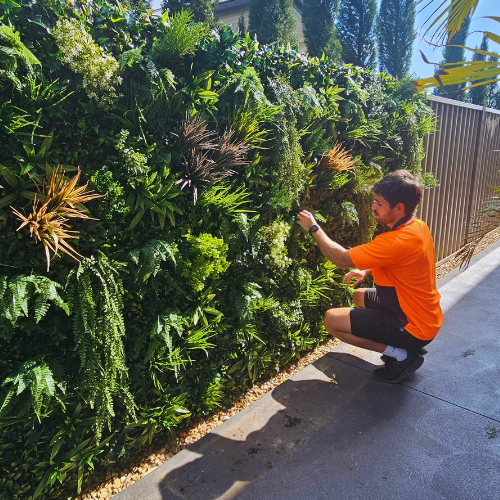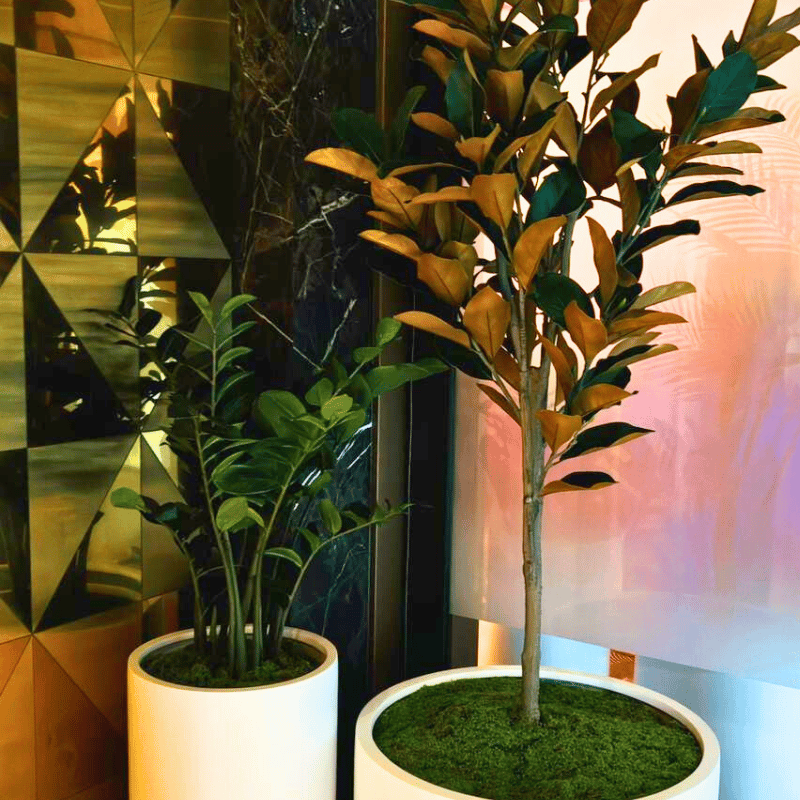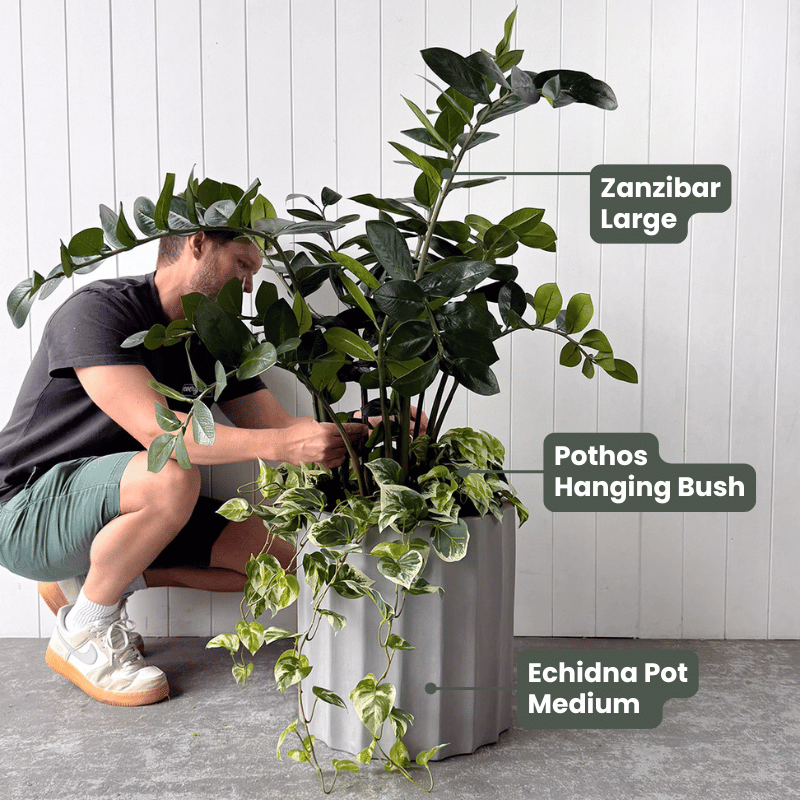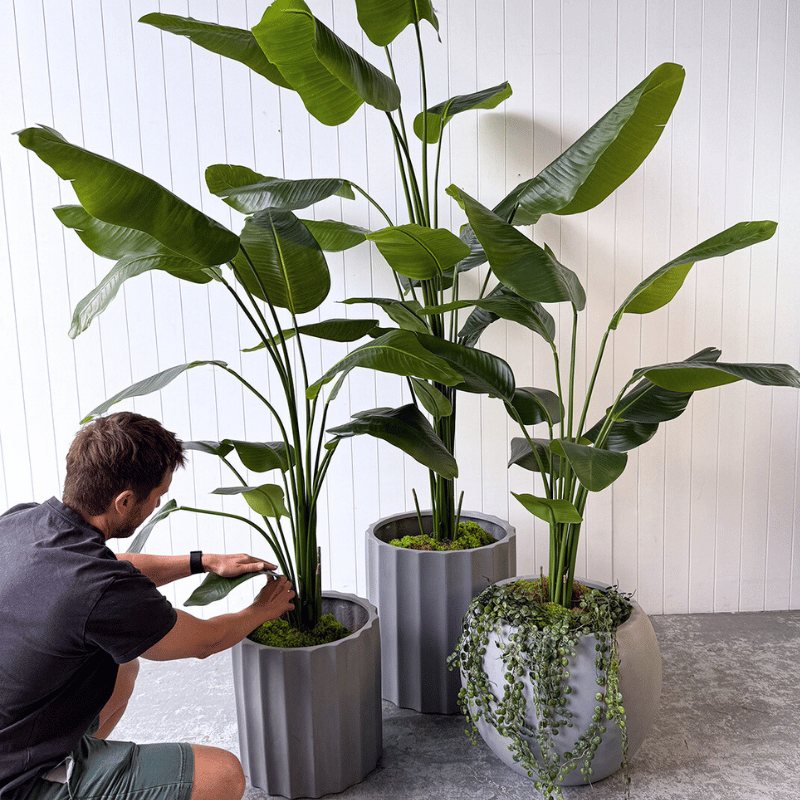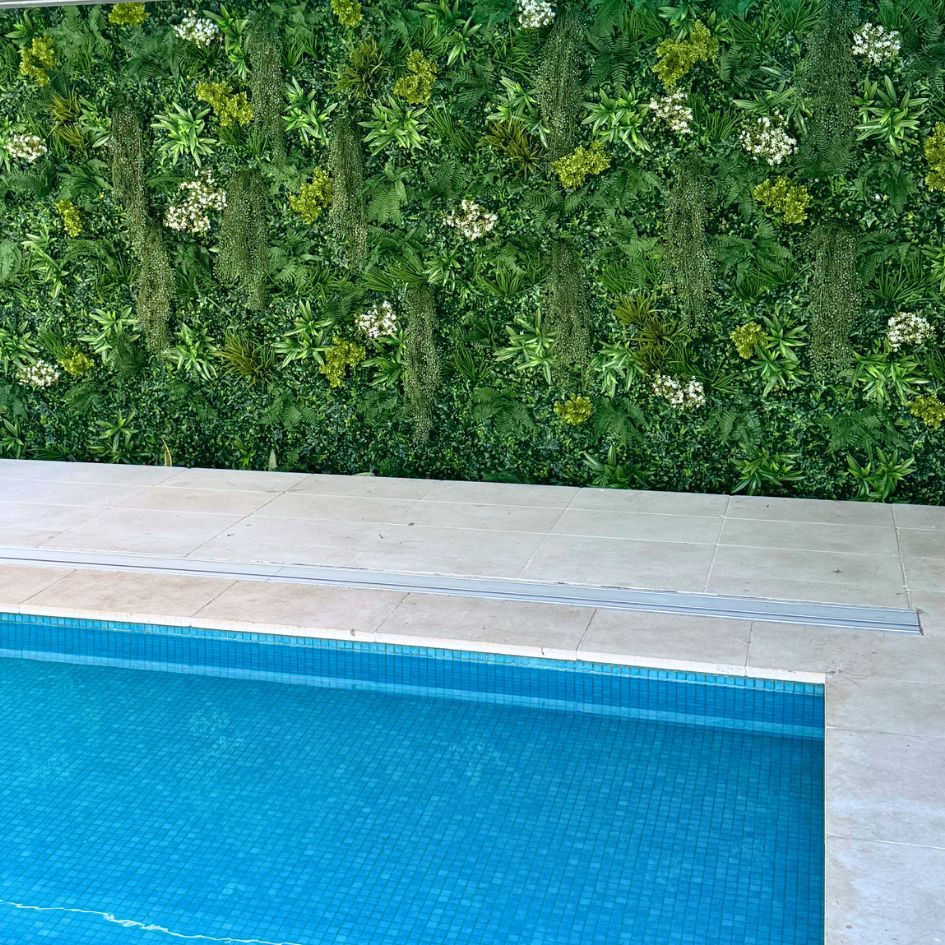
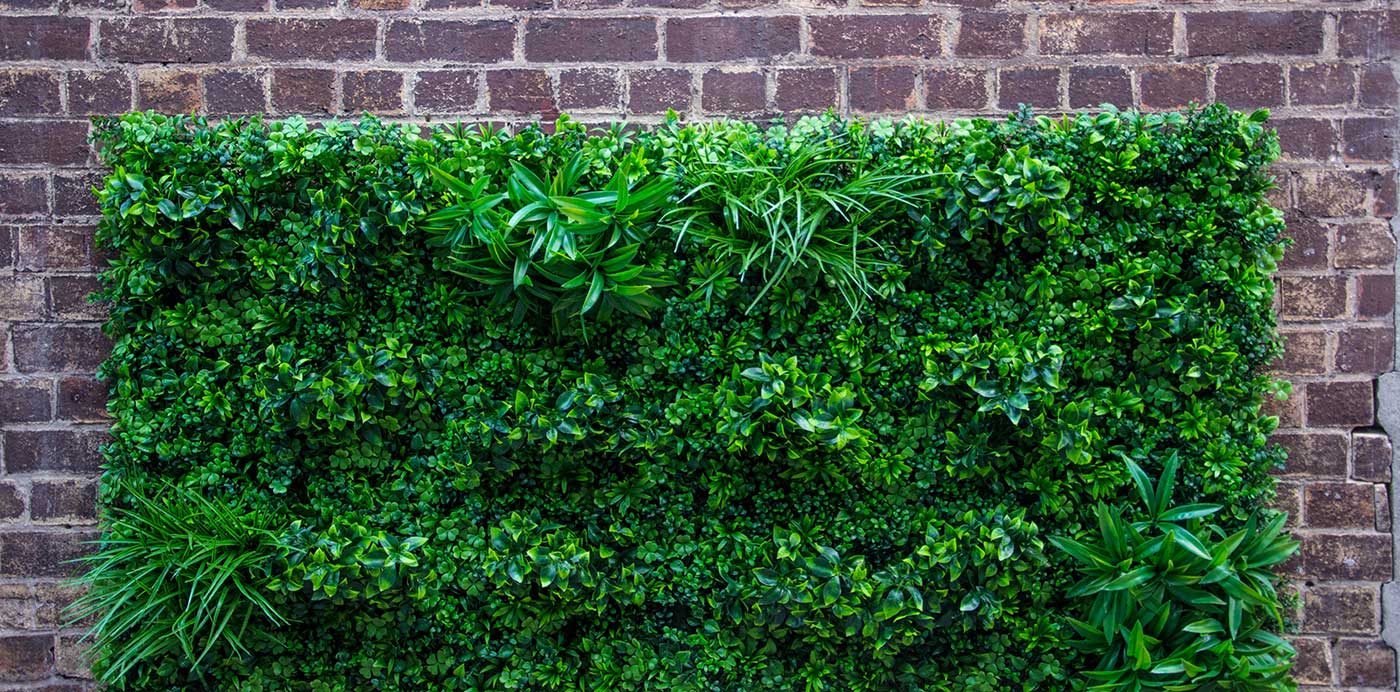
Vertical gardens have taken the design world by storm. In an age of concrete, people crave the aesthetics and ambience of greenery, even if they don’t have enough space for planters and pots.
Vertical gardening is a functional and space-efficient method for growing food, such as herbs and vegetables, especially in small spaces or on buildings. These systems can be installed on commercial and residential buildings to enhance architectural aesthetics, environmental performance, and urban space efficiency. Vertical gardening utilizes structures such as living walls, trellises, hanging planters, and stacked containers to grow upwards, making it ideal for balconies, fences, or interior walls. The main types of vertical gardening systems include green walls, green facades, and freestanding vertical garden systems. Green walls are comprised of containerized plants or modular green panels positioned across a wall face, while green facades use climbing or scrambling plants that grow upwards or across a support structure such as a trellis. Freestanding vertical gardens consist of plants grown upwards and sometimes overhead on vertical garden frames. Some vertical gardens are grown hydroponically, stacking plants in layers without soil, while others are soil based, using organic potting mix for strong plant growth. Food-safe materials, such as inert plastics like polypropylene, are often used in vertical planters, making them suitable for growing edible plants. This allows for convenient harvesting of fresh herbs and vegetables for cooking. Wall vertical garden kits are an excellent option for all gardeners, providing both beauty and functionality, and some kits come with built-in irrigation systems for efficient watering.
The difference between vertical gardening systems and traditional ground-based gardening is significant. Vertical gardens save valuable ground space and can produce higher yields than growing directly in the ground, making them especially advantageous in urban environments or where space is limited. Vertical gardening also reduces weed pressure and pests, improves plant health by enhancing airflow, and makes harvesting easier as vegetables and herbs can be grown at waist or eye level.
With vertical gardens, you can bring greenery to just about any space. Indoor or outdoor, these gardens can turn a nondescript area into something beautiful, artistic, and cutting edge. And when you install an artificial green wall system, you don’t have to worry about insects, excessive moisture, or the loss of your precious plants if they dry out or suffer from disease. Your garden will always look as beautiful as the day it was installed.
In this post, we’ll introduce beginners to vertical garden systems and their unique features.
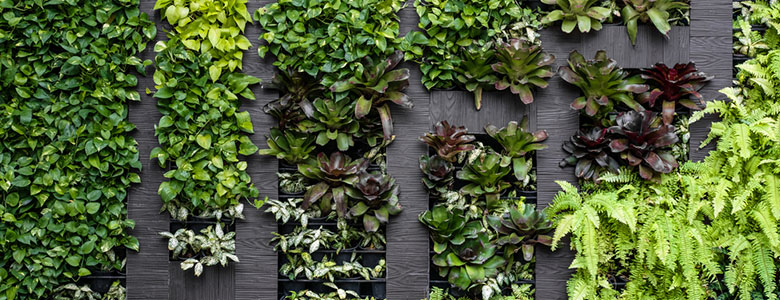
Types of Vertical Gardening Systems
Vertical gardening systems are a fantastic way to make the most of limited space, whether you’re working with a small balcony, a backyard, or even a commercial space. There are several different types of vertical garden systems, each offering unique benefits and design possibilities to help you grow plants vertically and transform any wall or outdoor area into a lush, green feature.
Freestanding vertical garden systems are one of the most versatile options available. These systems can be placed anywhere you have enough sunlight—on a patio, in a backyard, or even inside commercial spaces. Their modular design allows you to easily move and rearrange them as needed, and they provide easy access for watering, pruning, and harvesting. Freestanding systems are great options for those who want flexibility and the ability to grow a variety of plants, from fresh herbs to vegetables and flowers.
Wall-mounted vertical garden systems are perfect for areas with limited space. By attaching planters or panels directly to a wall, fence, or even a feature wall, you can create a stunning green wall or living wall that doubles as a piece of art. These systems are ideal for growing herbs, vegetables, and flowers, and they make it easy to turn unused wall space into a productive garden bed. Wall-mounted systems are especially popular in urban environments and can be used both indoors and outdoors.
Hanging baskets offer another simple and effective way to grow plants vertically, especially in small spaces like balconies or patios. Hanging baskets can be filled with a variety of plants, including trailing flowers, herbs, and even compact vegetables like cherry tomatoes or beans. They’re easy to move to ensure your plants get enough sunlight, and they add a charming, layered look to any outdoor area.
When choosing a vertical garden system, it’s important to consider factors like adequate drainage, sunlight, and the type of soil or potting mix you’ll use. Many vertical garden kits come with built-in drainage holes and drip irrigation systems to make watering easy and prevent waterlogging. Look for durable materials such as plastic containers, cattle panels, or modular panels that can withstand the elements and provide long-lasting support for your plants.
In Australia, the market for vertical garden products is thriving, with a wide range of garden kits, vertical planters, and modular systems available to suit any space or style. Whether you want to create a lush green wall in your backyard, a productive herb garden on your balcony, or a striking feature wall in a commercial space, there are plenty of great options to choose from.
To successfully grow herbs, vegetables, and flowers in your vertical garden, make sure your plants receive at least 4-6 hours of direct sunlight each day and use a nutrient-rich, well-draining potting mix. Vertical planters are ideal for growing everything from tomatoes and cucumbers to beans and fresh herbs, allowing you to enjoy homegrown produce even in the smallest of spaces.
With so many different types of vertical gardening systems available, it’s easy to find a solution that fits your needs and helps you make the most of your space. By selecting the right system and providing your plants with adequate sunlight, water, and drainage, you’ll be able to create a thriving vertical garden that brings beauty, functionality, and many benefits to your home or business.
Benefits of Artificial Vertical Garden Systems
Not all areas are easy to decorate. Some have awkward traffic patterns, some have strange lighting, and some are just too small for the introduction of many decorative elements. Adding greenery is a simple but effective way to take care of these difficult areas. There is a key difference between artificial and living walls: artificial systems provide instant results and require less maintenance, while living walls involve real plants and ongoing care.
Often, our vertical gardens are installed in areas that need a creative solution. Maybe it’s a location that doesn’t naturally lend itself to plant growth or maintenance. Maybe it’s an area that has poor lighting or cramped spacing. Whatever the reason, artificial vertical garden systems can provide additional life and aesthetic interest. Artificial vertical gardens are also a functional solution for enhancing the aesthetics and environmental performance of buildings and commercial spaces.
Artificial vertical gardens are easy to set up, they’re durable, and they’re instantly green. You can easily clean them with a damp cloth if they get dusty or dirty, and they provide a consistency of coverage that you can’t usually obtain with natural plants. Artificial living walls can be used in both residential and commercial buildings to create visually appealing and low-maintenance green spaces.
Lighting
Artificial vertical gardens can be installed just about anywhere. They don't require UV lighting, so you don't have to worry about installing them in places that receive too much or too little sunlight. Some people like to change the lighting dynamics in a space by installing flood lights near vertical gardens. This creates interesting, eye-catching lighting effects.
Installation
Our vertical garden systems come to you in panels, making them easily customisable. You can install them yourself or have our team of national installers help you. You can choose how many panels you want and design the configuration that best meets your stylistic needs.
Since you don't have to worry about irrigation or watering, you can install your vertical garden anywhere without having to plan for plumbing and drainage.
Instant Gratification
With living vertical gardens, it usually takes several weeks or even months for the plants to grow and fill out. In the meantime, your vertical garden will look sparse and underdeveloped. With our artificial vertical garden systems, you will enjoy instant, mature, permanent results. You'll be able to immediately see the fruits of your designing labors (without frustrating maintenance).

Moss Wall Options
If you’re really craving live plants but just don’t want to deal with all of the associated maintenance issues, consider installing a live moss wall. The difference between moss walls and other types of living walls is that moss walls are uniquely functional—they require very little maintenance, do not need soil or regular watering, and still provide air purification benefits.
Moss lives a different life than most of its green relatives. It grows an average of just 1mm to 3mm per year, so it doesn’t require pruning or trimming.
Our moss walls are made from a natural moss called stellaris, which is grown in the forests of Scandinavia. We import it and create no-maintenance panels for green walls. These walls are breathtaking, and not only do they brighten up a room, but they actually clean the air as well. In fact, there are several scientific benefits of moss walls.
Questions to Ask Before You Buy
If your considering installing a vertical garden system, there are several important questions you should ask before you buy.
Many customers have shared success stories about how vertical gardening systems have transformed their homes, offices, and outdoor spaces. These experiences show that vertical gardens work effectively in maximizing space, are easy to maintain, and can support a wide variety of plants, making them a practical solution for different environments and needs.
1. Do the plants look realistic?
While you want vertical gardens to attract the attention of visitors, you don't want to attract the wrong kind of attention. For example, if the plants in the garden are not biologically accurate, people might be drawn to it to decide what kinds of strange plants it contains.
This isn't the kind of attention you want. Therefore, it's important to find out if the plants in an artificial garden system are the right shapes, shades, and proportions as the natural plants they're imitating. When an artificial vertical garden resembles the genuine article, it provides a peaceful, refreshing backdrop for a beautiful space.
2. Can the garden be customised?
The space you're hoping to enhance probably already has some uniqueness of its own. Customizing the vertical garden gives you limitless options for creating something one-of-a-kind that will help you to achieve your design goals.
You can choose how many panels you need and then decide which flowers and plants will best fill those panels. Whether you prefer moss, evergreens, ferns, lavender, laurel leaves, Ficus, or even tropical plants, you'll be able to find the perfect combination to accent your wall.
3. Do artificial vertical gardens cost as much as live vertical gardens?
Not only do our vertical garden systems never die, but they also cost less than half as much as living vertical gardens. And that's just for the initial setup! Remember that artificial vertical gardens are maintenance free. You'll occasionally want to clean them, but they're cleaned just like any other decor that needs to be dusted from time to time.
Living vertical gardens, on the other hand, require daily maintenance. They must be watered, trimmed, sprayed, and replanted from time to time. So ongoing maintenance costs are also associated with living vertical gardens. If your budget is limited for this design element, opt for an artificial vertical garden.
As you can see, vertical garden systems are manageable even for beginners. In fact, you might say that we've designed our systems so that anyone can be successful with them. Because you have so many options available in terms of size, plant varieties, placement, and arrangement, you'll be able to create a custom solution for any space, indoor or out.
If you have additional questions about artificial vertical garden systems or live moss walls, feel free to contact us at Evergreen Walls. We look forward to helping you to create a vertical masterpiece for your unique space.